 Skip to content



Soldier set of the Month: Battle of Monte Cassino
Before I launch into the main section of the blog, a quick note to say
our latest COBI order is on the way which includes eight exciting new
models - see below.
Have a great weekend.
Warmest wishes,
Zoë
our latest COBI order is on the way which includes eight exciting new
models - see below.
Have a great weekend.
Warmest wishes,
Zoë
New releases due next week
Due in stock 15th - 17th April - place a pre-order now.
Soldier Set of the Month: The Battle Monte Cassino
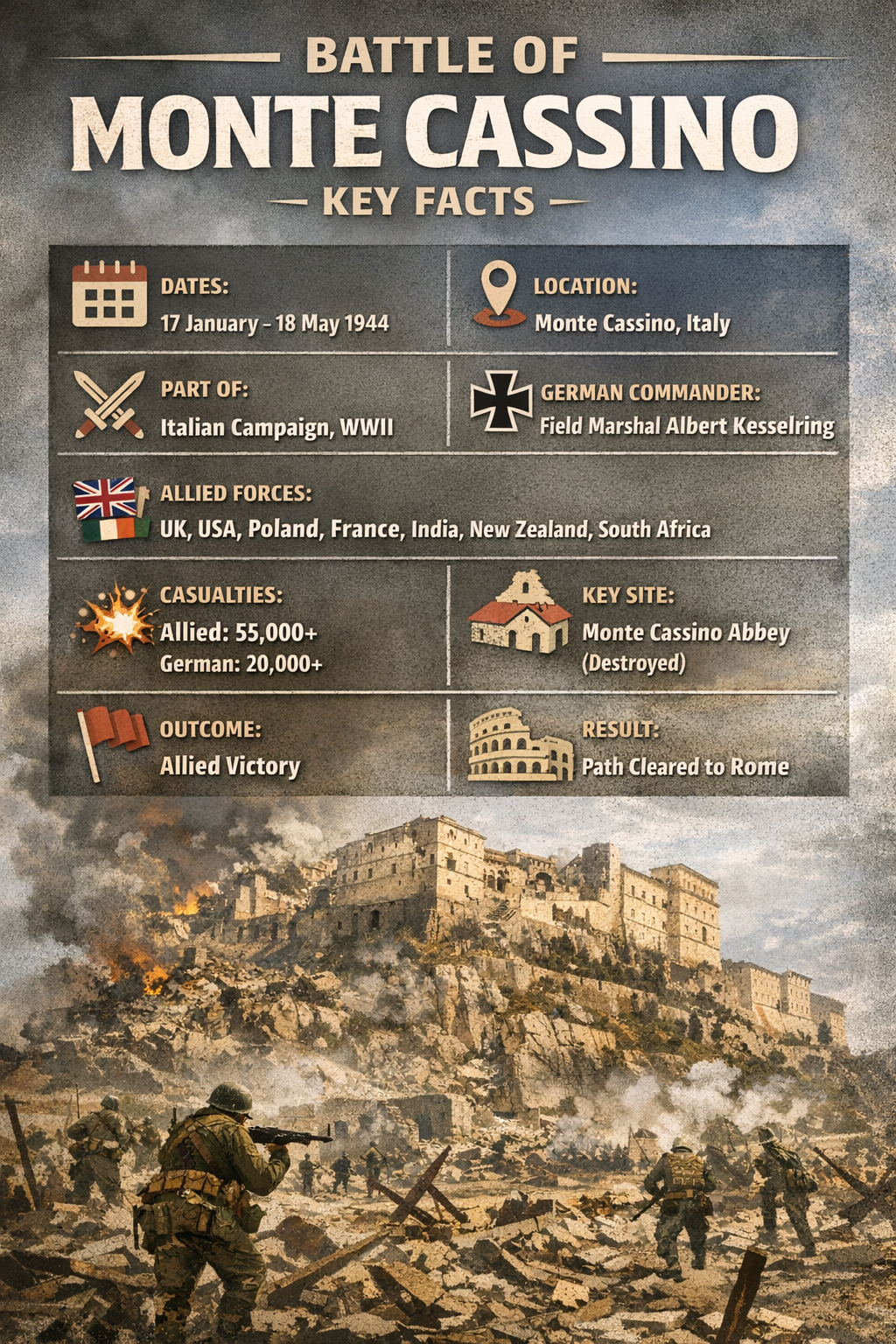
The Battle of Monte Cassino remains one of the most intense and strategically significant clashes of the World War II. Taking place between January and May 1944, it formed a crucial part of the Allied campaign to push German forces out of Italy and advance towards Rome. However, what initially appeared to be a straightforward objective soon became a prolonged and devastating struggle.
At the heart of the conflict was the German defensive position known as the Gustav Line. This formidable barrier stretched across Italy and was anchored by the mountainous terrain surrounding Monte Cassino. Overlooking the area was the historic Monte Cassino Abbey, a centuries-old monastery that provided a commanding view of the surrounding valleys and key routes.
German forces, led by Field Marshal Albert Kesselring, used the rugged landscape to their advantage. Their defensive strategy relied on heavily fortified positions, making it extremely difficult for Allied troops to advance. The Allies, a multinational force including British, American, Polish, French, Indian, and New Zealand troops, faced not only fierce resistance but also harsh winter conditions and treacherous terrain.
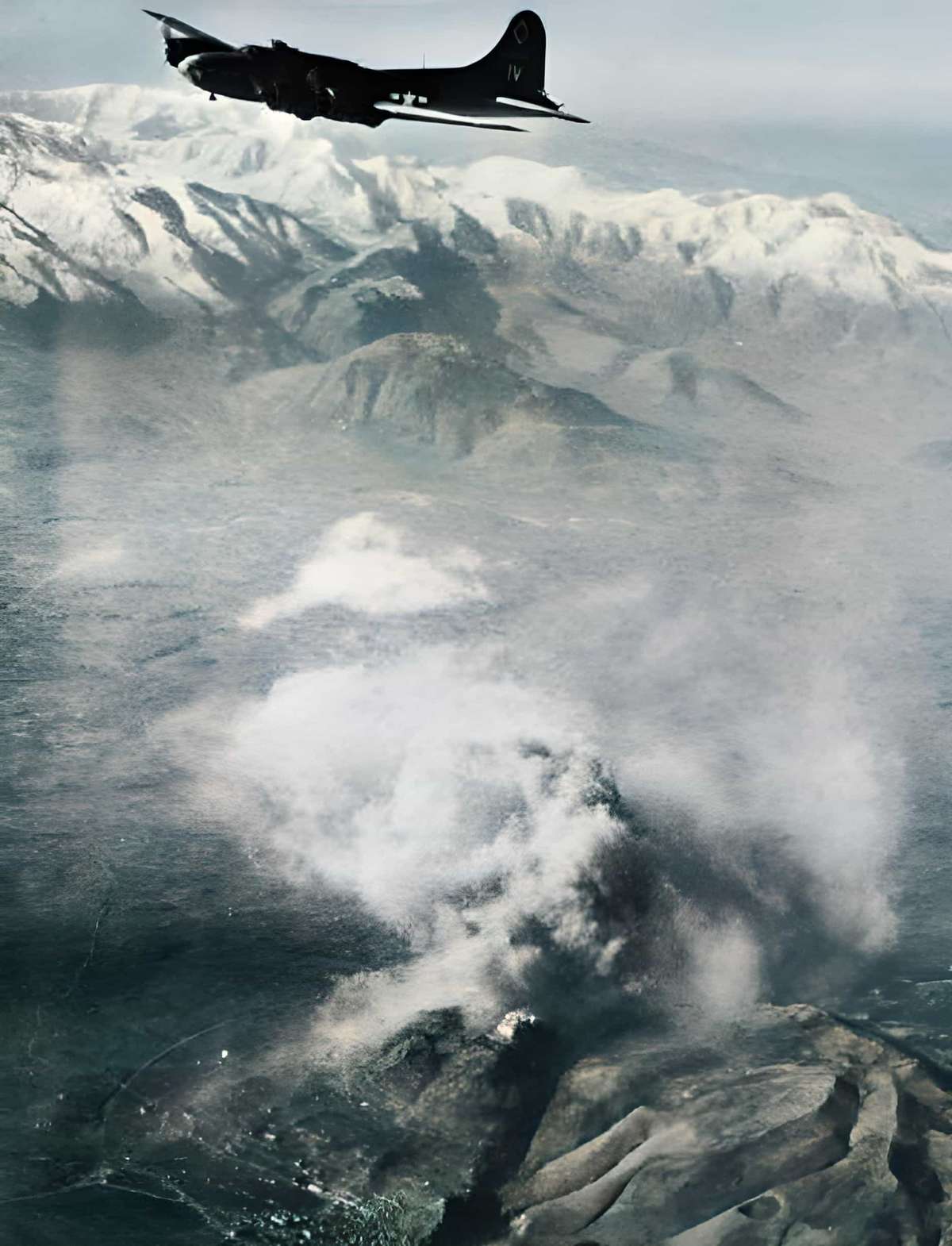
Pictured above: On February 15, 1944, a B-17 Flying Fortress flies above Monte Cassino.
The battle unfolded in four major assaults. The first attack in January 1944 failed to break through German lines, as Allied forces struggled with both enemy fire and environmental challenges. In February, the Allies made the controversial decision to bomb the Monte Cassino Abbey, believing it was being used as a German observation post. In reality, German troops had avoided occupying the monastery until after it was destroyed. The bombing reduced the abbey to rubble, ironically creating stronger defensive positions for German forces.
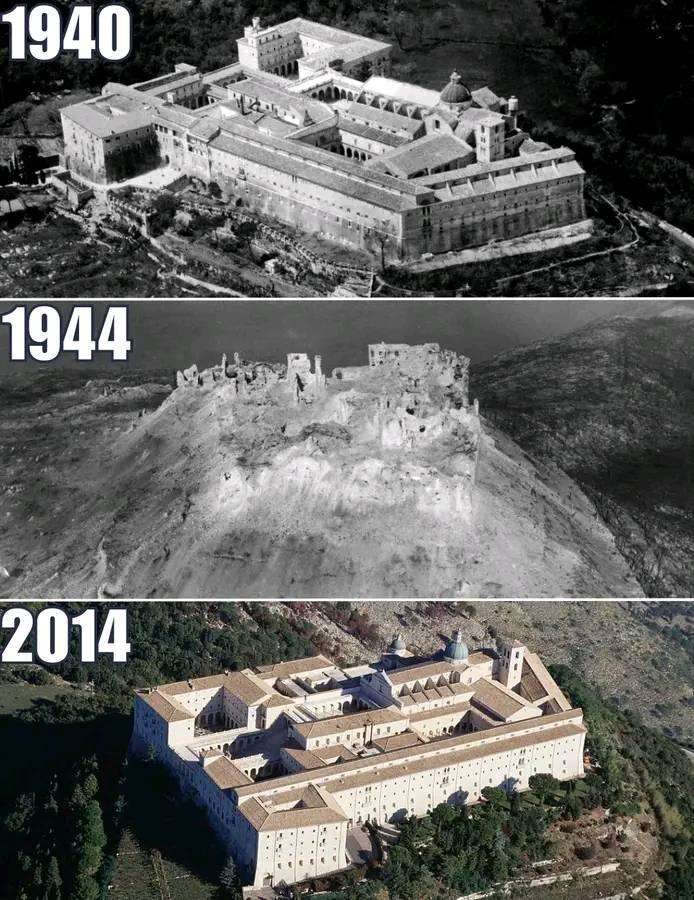
Subsequent assaults in March also failed to secure a decisive breakthrough. Each attempt resulted in heavy casualties, highlighting the difficulty of fighting in mountainous terrain against a well-prepared enemy. The battle became a grim stalemate, with both sides suffering significant losses.
The turning point came in May 1944 during Operation Diadem, a coordinated and large-scale Allied offensive. This final assault involved carefully planned attacks across multiple fronts, overwhelming German defences. One of the most significant moments came when Polish forces captured the ruins of the monastery, symbolically raising their flag over Monte Cassino.
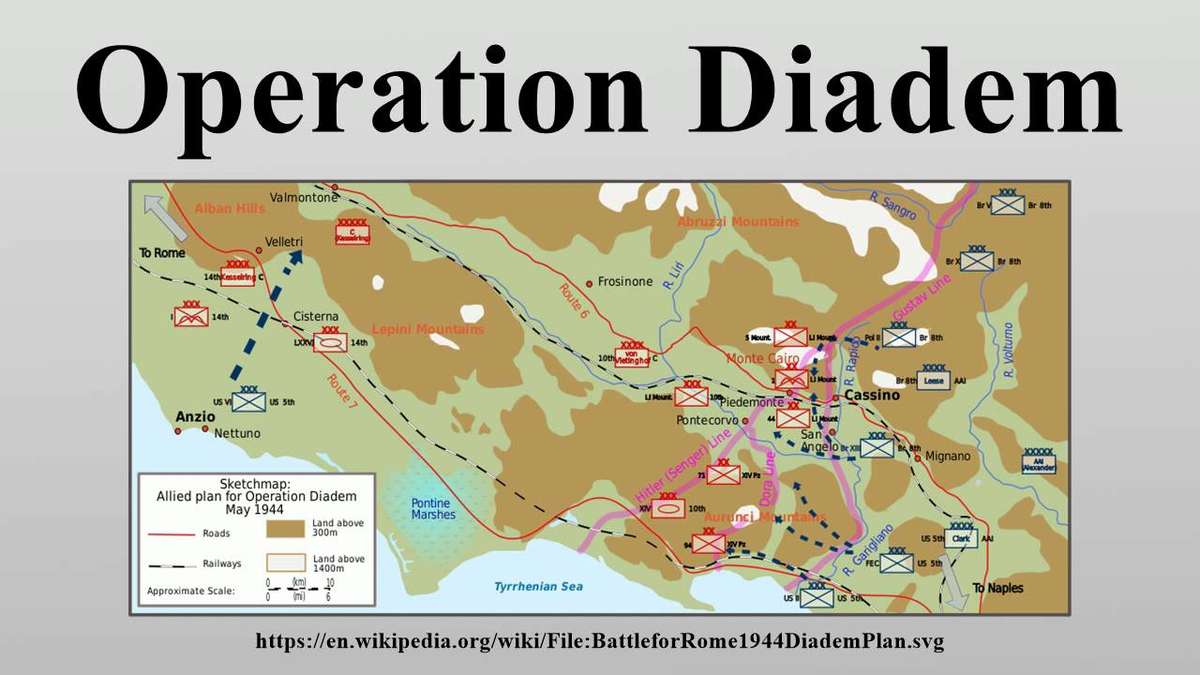
The fall of Monte Cassino forced German troops to retreat from the Gustav Line, allowing Allied forces to continue their advance. Shortly afterwards, Rome was liberated in June 1944, marking a major strategic victory.
Despite its success, the Battle of Monte Cassino came at a high cost. Tens of thousands of soldiers were killed or wounded, and the destruction of the historic abbey sparked lasting controversy. Today, the battle is remembered not only for its military importance but also as a powerful symbol of sacrifice, resilience, and the harsh realities of war.
YouTube film about the Battle of Monte Cassino
For a deeper dive into the history and timeline of the battle check out the War Channel's 45 minute documentary below.