


Model of the Month: COBI Supermarine Spitfire Mk. II P7350
Hello and welcome to this week's blog.
A lot of you have been waiting for this historic moment as COBI has finally created a model of the famous Spitfire P7350 in elegant brick form.
But before I jump into the history behind the model, just to let you know we've added EIGHT more pre-orders to the collection this week, due for release before the end of the year. Check them out below.
Also, our COBI delivery arrived today (Friday) - but too late to dispatch any of the pre-orders unfortunately. They will all be shipped as a priority first thing on Monday. For a reminder of which new models are now in stock check out last week's blog here.
Have a great weekend.
Warmest wishes,
Zoë
A lot of you have been waiting for this historic moment as COBI has finally created a model of the famous Spitfire P7350 in elegant brick form.
But before I jump into the history behind the model, just to let you know we've added EIGHT more pre-orders to the collection this week, due for release before the end of the year. Check them out below.
Also, our COBI delivery arrived today (Friday) - but too late to dispatch any of the pre-orders unfortunately. They will all be shipped as a priority first thing on Monday. For a reminder of which new models are now in stock check out last week's blog here.
Have a great weekend.
Warmest wishes,
Zoë
Latest Pre-orders Announced by COBI
Model of the month:
COBI Supermarine Spitfire Mk. II P7350
COBI Supermarine Spitfire Mk. II P7350
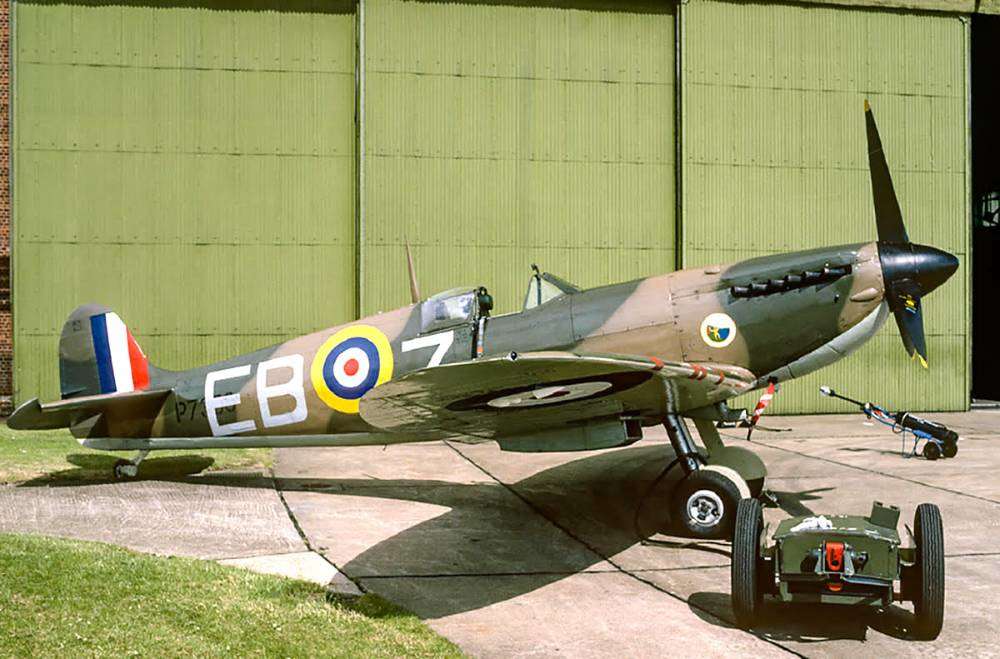
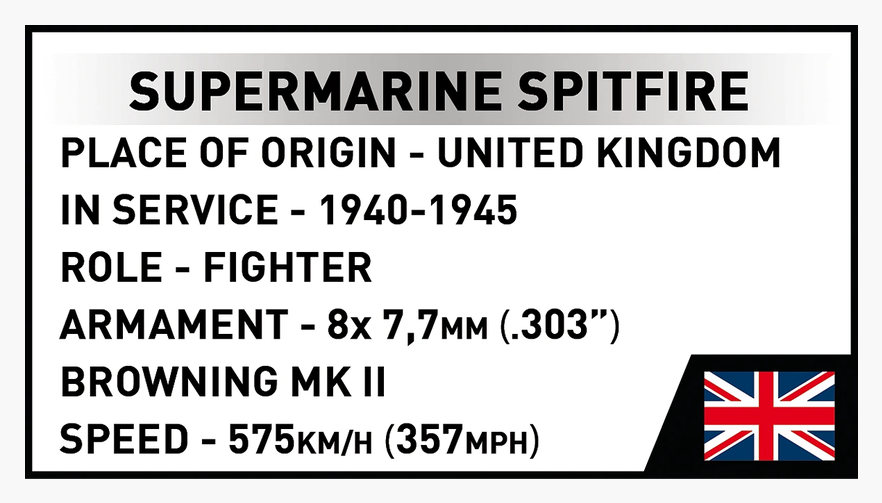
Few aircraft are as instantly recognisable as the Supermarine Spitfire. With its distinctive elliptical wings and legendary place in British aviation history, the Spitfire has become one of the most celebrated aircraft ever built. But while thousands of Spitfires saw service during the Second World War, very few can claim the extraordinary history of P7350.
Built for the Battle of Britain
Built in 1940, P7350 was believed to be the 14th aircraft of 11,989 built at the Castle Bromwich ‘shadow' factory in Birmingham. She entered RAF service in August 1940, at the height of the Battle of Britain, and was soon flying operationally with No. 266 (Rhodesia) Squadron before transferring to No. 603 (City of Edinburgh) Squadron at RAF Hornchurch.
P7350 Goes into Combat
On 25 October 1940, P7350 experienced combat first-hand. Flying with 603 Squadron and piloted by Polish Pilot Officer Ludwik Martel, the Spitfire was attacked by German Messerschmitt Bf 109 fighters. Cannon fire badly damaged the aircraft and wounded Martel. Despite his injuries, he managed to bring the stricken Spitfire down through thick cloud before making a forced, wheels-up landing near Hastings.
Remarkably, both pilot and aircraft survived.
P7350 was repaired and returned to service, continuing its RAF career with several squadrons. But after the war, its future looked considerably less certain.
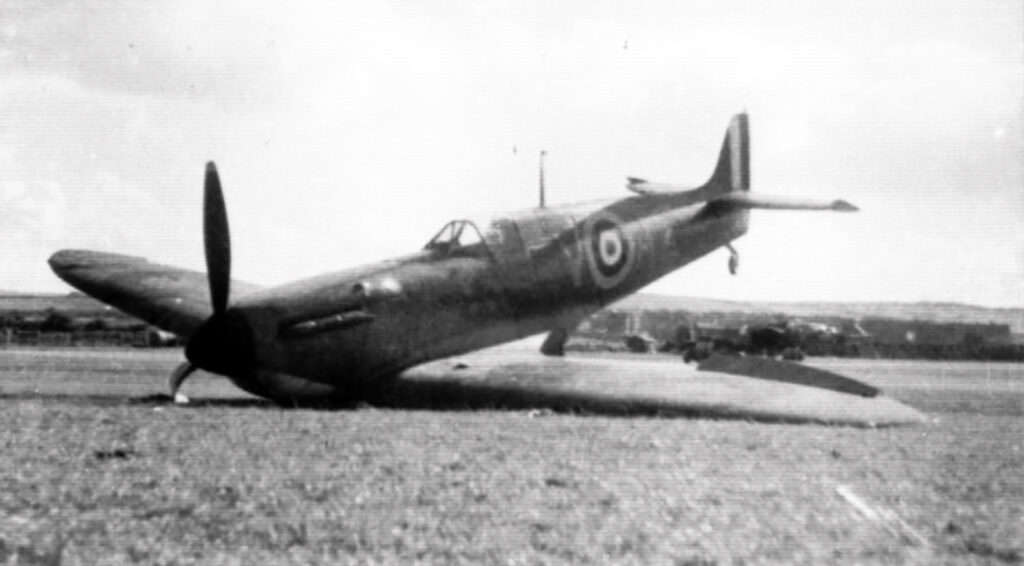
Pictured above: This is not actually Spitfire P7350, but 234 Sqn Spitfire Mk 1 ‘AZ-V’, which made a wheels-up landing at RAF St Eval on 9th October 1940. P7350 would have suffered similar damage after being shot down and force-landed, wheels-up, on 25th October 1940.
From £25 Scrap to Priceless Survivor
In 1948, P7350 was sold for scrap to John Dale & Sons for just £25. At the time, the aircraft was simply surplus wartime machinery, and it could easily have been dismantled and lost forever.
However, its new owners soon discovered that they had something far more valuable than scrap metal. Recognising the aircraft as a genuine Battle of Britain veteran, John Dale & Sons decided to preserve it and generously presented P7350 back to the RAF as a museum piece.
That decision saved an irreplaceable piece of aviation history.
P7350 remained preserved at RAF Colerne for around two decades before receiving another extraordinary lease of life.
From Museum Piece to Movie Star
In the late 1960s, P7350 was restored to flying condition and selected to appear in the classic film Battle of Britain. After around two decades on the ground, the veteran Spitfire returned to the air and took part in the film's aerial sequences.
Following filming, P7350 joined what would become the Battle of Britain Memorial Flight, where it has remained ever since.
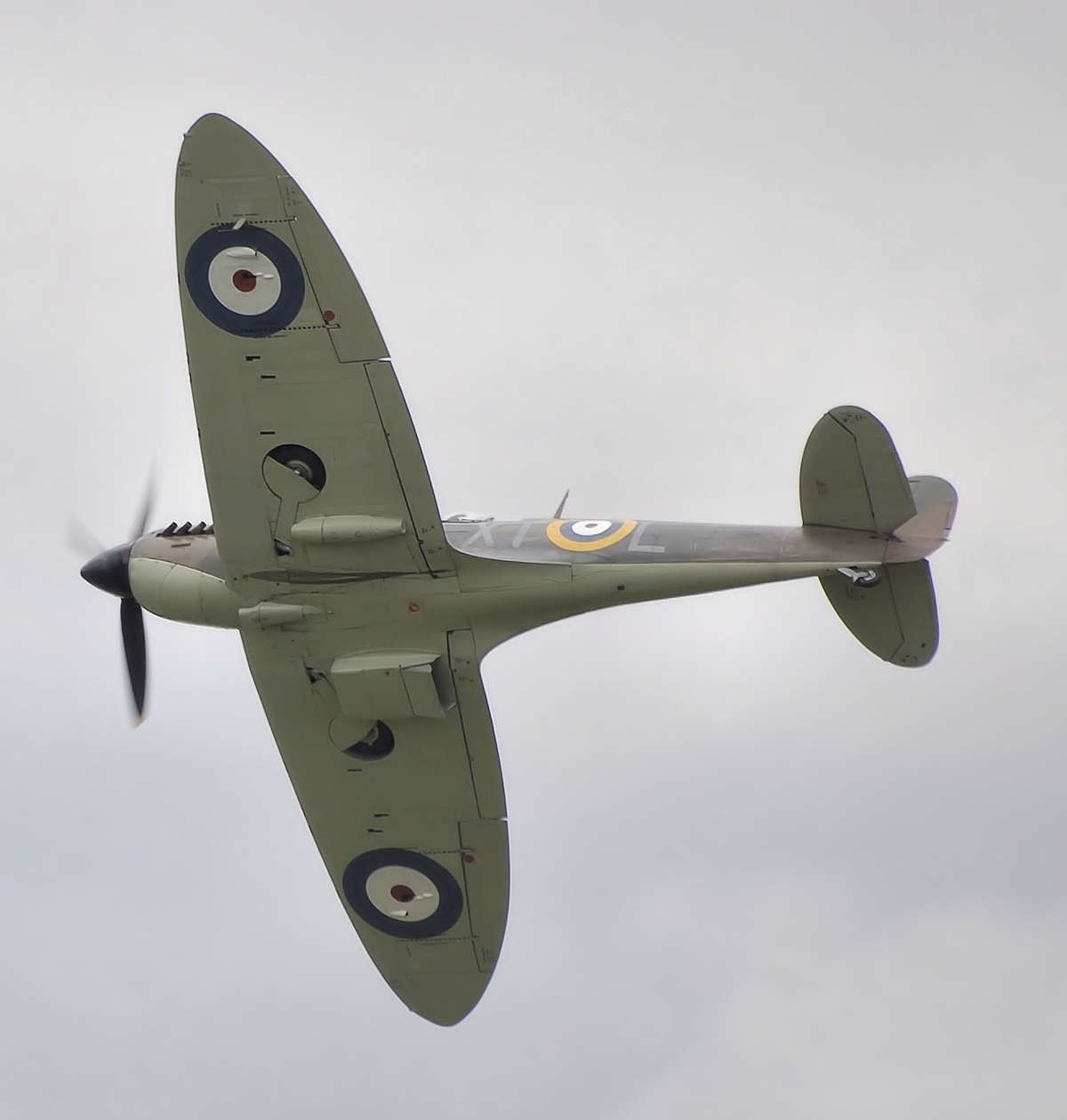
Pictured below: Supermarine Spitfire Mk IIA (Royal Air Force code P7350) at Kemble Air Day, Kemble Airport, Gloucestershire, England. Image by Adrian Pingstone (Arpingstone)
A Spitfire Still Flying Today
What makes P7350 particularly special is it is recognised as the oldest airworthy Spitfire, as well as the only airworthy Spitfire with genuine Battle of Britain combat experience. More than eight decades after entering RAF service, it remains a direct link to the aircraft, pilots and events of 1940.
Over the years, P7350 has worn different markings, and today it carries the colours of No. 54 Squadron’s ‘Kiwi III’, associated with New Zealand fighter ace Alan Deere. Its current appearance pays tribute to another chapter in the remarkable story of the Spitfire and the international pilots who flew it during the Battle of Britain.
The COBI Supermarine Spitfire Mk. II P7350
It is this extraordinary aircraft that COBI is bringing to collectors at the end of September with the release of COBI-5778 – Supermarine Spitfire Mk. II P7350.
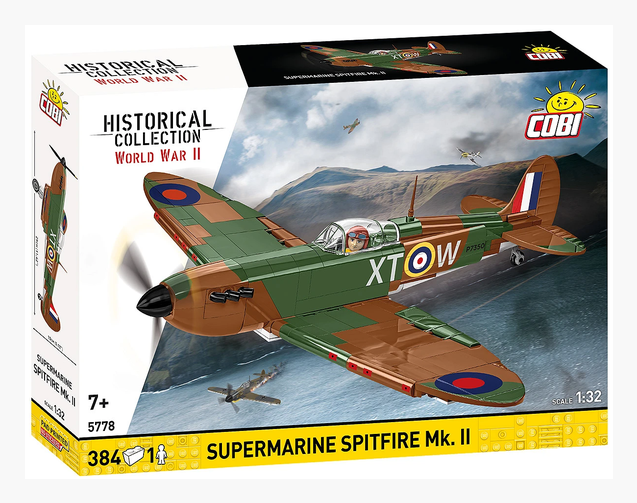
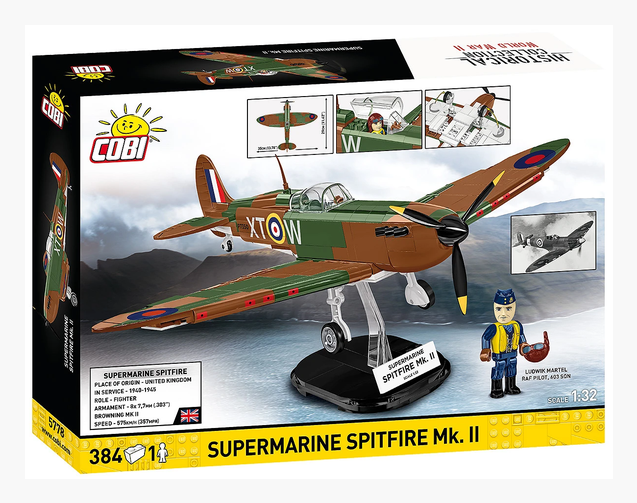
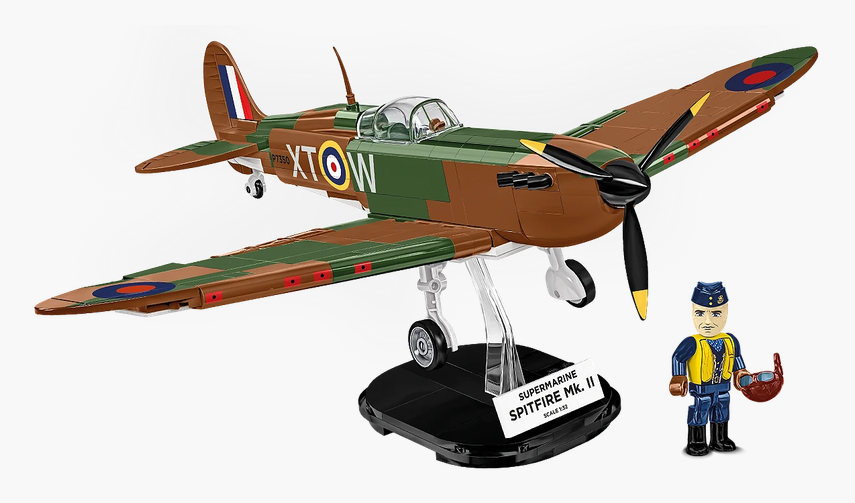
Comprising 384 bricks and built to 1:32 scale, the new model captures the distinctive shape and character of this legendary fighter in brick form. It features the Spitfire’s famous elliptical wings, an opening cockpit, rotating propeller and movable wheels, alongside historical RAF markings. A display stand and name plaque complete the model, while the included Polish pilot figure provides a direct connection to P7350’s wartime story.
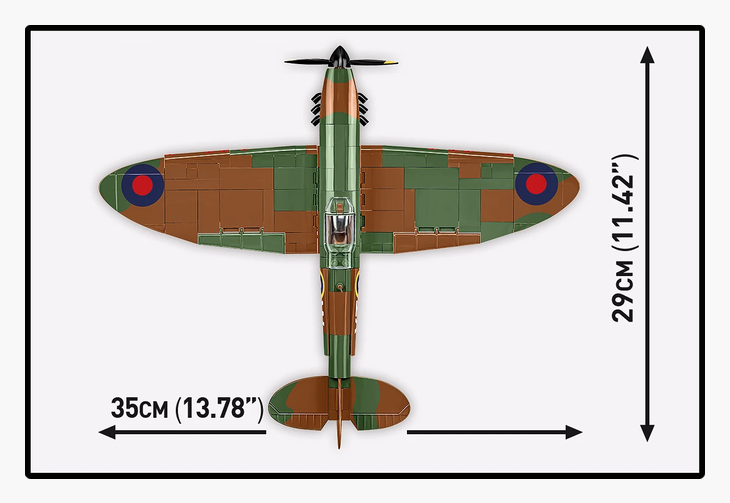
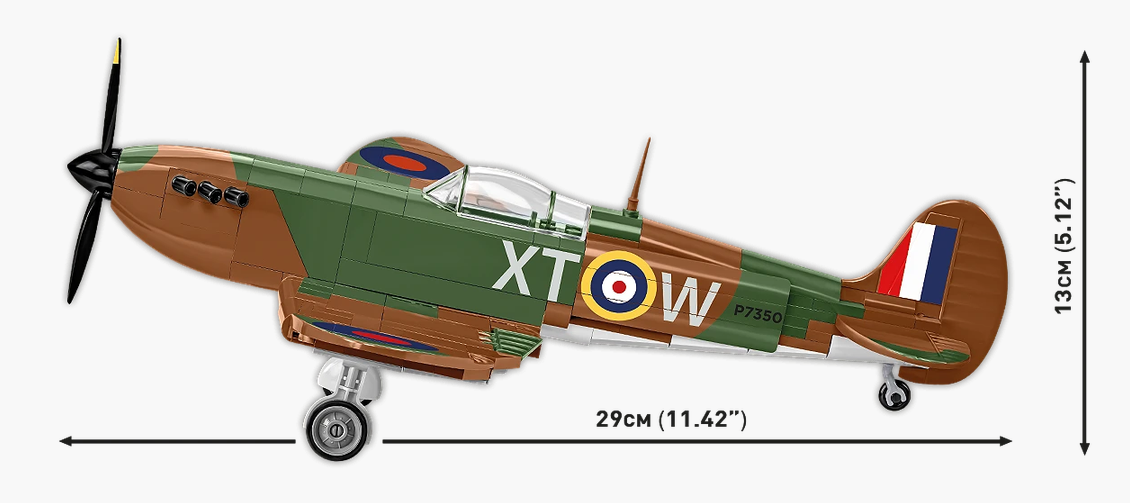
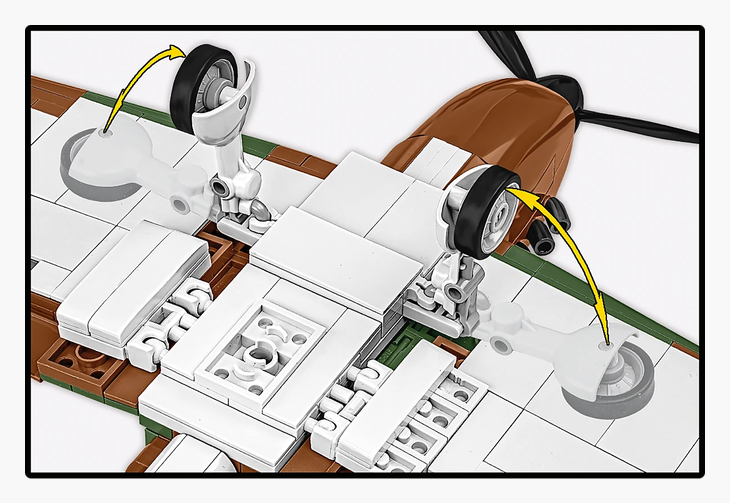
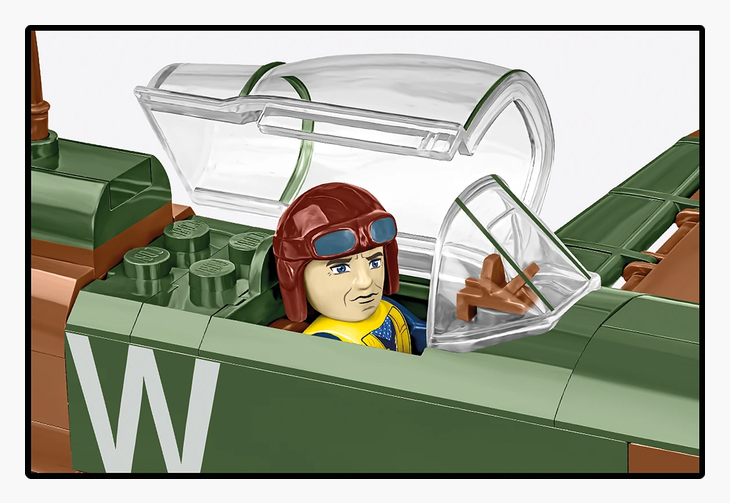
Scheduled for release at the end of September, COBI-5778 is a fitting addition to any collection dedicated to aviation, the Battle of Britain or military history.
From the skies over southern England in 1940, to being sold for just £25 as scrap, then rescued and returned to the RAF, appearing on the big screen and eventually returning to the skies as a living piece of history, P7350 has endured against the odds.
Now, with COBI-5778, its remarkable story can take pride of place in your collection.
The COBI Supermarine Spitfire Mk. II P7350 – a Battle of Britain veteran, recreated at 1:32 scale with 384 bricks.
See P7350 in action
Want a taste of the action from your arm chair? Watch this 6 minute clip of the Battle of Britain veteran in flight alongside the mighty Avro Lancaster, and see the aircraft in its current ‘Kiwi III’ markings.